
No products in the cart.

How to Buy Original Art Online: A Guide to Latin American Paintings
Buying original art online has never been more accessible — or more rewarding. Whether you are decorating a new home,…


Behind every great painting is a story — of technique developed over years of practice, of materials chosen with care, and of a creative process shaped by both tradition and personal vision. Understanding how an artist works deepens our appreciation of the finished piece and connects us more intimately to the art we live with.
Argentine figurative painters of the 20th century were trained in rigorous academic traditions. Students at institutions like the National Academy of Fine Arts in Buenos Aires studied anatomy, perspective, color theory, and the techniques of the European masters. This foundation gave artists like Italo Pedro De Luca the technical command to paint with authority across multiple genres — landscape, portraiture, still life, and figure composition.
De Luca’s education and early practice are visible in the confident draftsmanship that underpins all his work. Whether in a sweeping landscape or a quick graphite sketch, the structural understanding of form is always present.
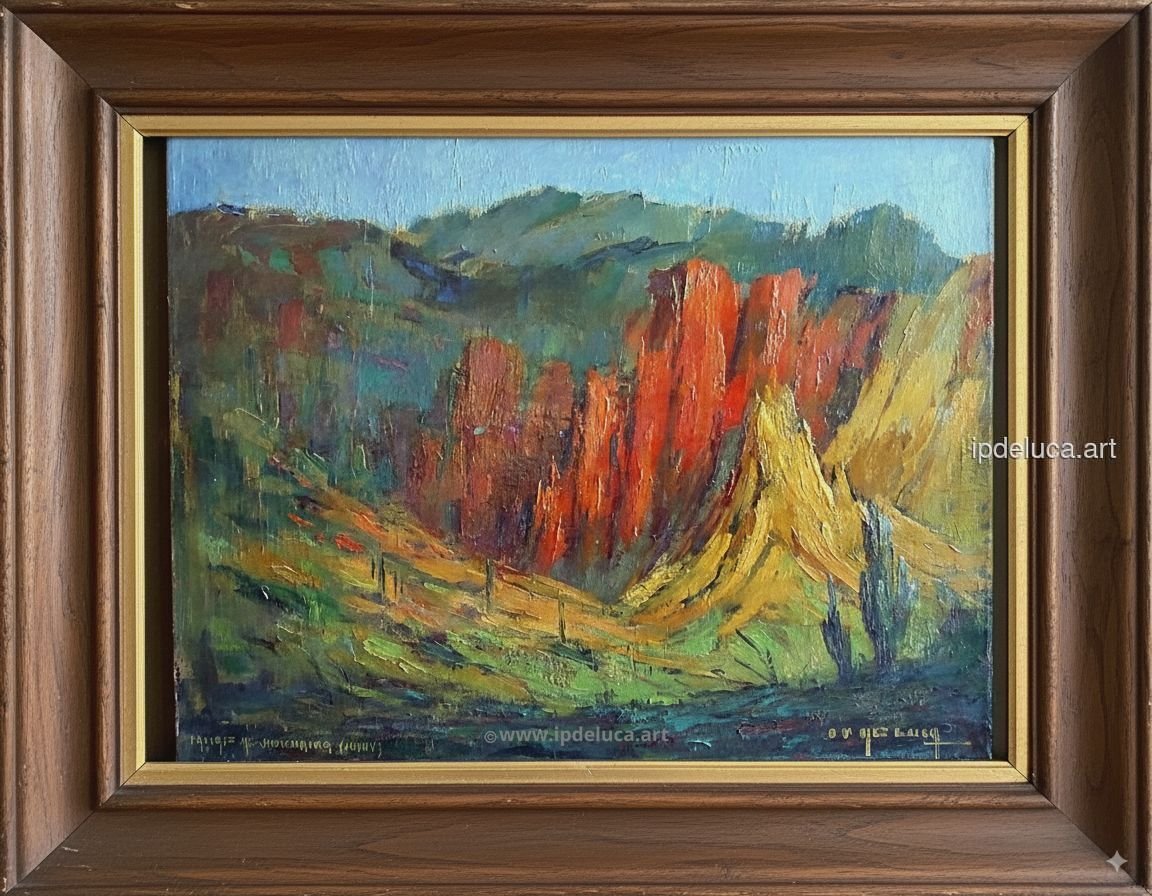
Many of De Luca’s landscape paintings began as plein air studies — works painted directly from nature, outdoors, in the presence of the subject. This approach, popularized by the French Impressionists and adopted enthusiastically by Argentine painters, produces a freshness and immediacy that studio work alone cannot achieve.
Plein air painting demands quick decisions about composition, light, and color. The artist must work efficiently, capturing the essential character of a scene before the light changes. This discipline produces paintings with a vitality that resonates with viewers — we sense the artist’s direct encounter with the landscape.
Some works would then be developed further in the studio, where the artist could refine details, adjust composition, and achieve the level of finish appropriate to a larger or more complex painting.
De Luca worked primarily in oil on canvas and board, as well as graphite on paper for his drawing work. Oil paint — made from pigment suspended in linseed or similar drying oils — has been the dominant medium of Western painting for centuries, valued for its richness of color, flexibility, and permanence.
His technique shows influences from both impressionist and post-impressionist traditions: visible brushwork that gives energy to surfaces, careful attention to color temperature (the warm/cool relationships that create the illusion of light and atmosphere), and a palette that ranges from the earth tones of the Argentine northwest to the vivid greens and blues of the littoral regions.
Drawing is often called the backbone of visual art, and De Luca’s graphite works demonstrate why. His portrait drawings and character studies reveal a mastery of line, tone, and expression. Using only pencil on paper, he creates works of remarkable depth and psychological presence.
These drawings are not preliminary sketches for paintings — they are complete, finished works of art in their own right. The graphite collection at ipdeluca.art showcases this aspect of the artist’s practice, offering collectors an intimate look at his observational skill.
When you purchase an original painting, you bring home not just an image but a physical object with its own presence and history. The texture of brushstrokes catches light differently throughout the day. Colors shift subtly as seasons change and natural light varies. An original painting is a living thing in your space — it rewards attention and reveals new details over years of viewing.
De Luca’s works, with their rich surfaces and evocative subjects, are particularly suited to domestic settings. A landscape painting above a fireplace, a flower study in a hallway, a graphite portrait in a study — these works create focal points that anchor a room and invite contemplation.

 Optimized by Seraphinite Accelerator