
No products in the cart.

Inside the Studio: The Technique and Process Behind Original Paintings
Behind every great painting is a story — of technique developed over years of practice, of materials chosen with care,…


Roberto Armando Fidel Rossi was one of the most prominent Argentine painters of the first half of the 20th century, recognized both for his artistic production and for his teaching work. As a colleague of I.P. De Luca, Rossi was part of an exceptional generation of Argentine painters who consolidated the national pictorial school and laid the foundations of modern Argentine art.
Born in Avellaneda, Buenos Aires Province, on January 4, 1896, and passing away in Buenos Aires in 1957, Roberto Armando Fidel Rossi developed an artistic career spanning more than four decades, during which he not only created significant pictorial work but also trained new generations of artists through his teaching practice.
The artistic training of Roberto Armando Fidel Rossi took place at the prestigious National Academy of Fine Arts, where he studied under the guidance of Ernesto de la Cárcova, one of the most influential figures in early 20th-century Argentine art.
Ernesto de la Cárcova was not only a recognized Argentine painter but also an exceptional educator who trained several of the most important Argentine painters of the early decades of the 20th century. His influence on Rossi was decisive, transmitting:
The National Academy of Fine Arts represented the most important center of artistic education in Argentina during the early decades of the 20th century. The Argentine painters trained in this institution shared common characteristics:
Studying at the National Academy of Fine Arts under Ernesto de la Cárcova meant being part of the Argentine artistic elite and assuming the responsibility of contributing to the development of national art.
Roberto Armando Fidel Rossi was a regular participant in the National Salon, the highest exhibition institution of Argentine art. His participation in the National Salon not only demonstrates the quality of his work but also his sustained commitment to the development of Argentine art.
The National Salon functioned as the main quality filter for Argentine painters, and Rossi’s regular participation confirms that his work consistently maintained the standards of excellence required by this prestigious institution.
In addition to his national participation, Roberto Armando Fidel Rossi also attended various provincial salons, demonstrating his commitment to the decentralization of Argentine art and his interest in reaching broader audiences throughout the country.
This participation in provincial salons was fundamental to:
The artistic quality of Roberto Armando Fidel Rossi transcended national borders, participating in international salons where he represented Argentine art before foreign audiences. This participation in international salons meant:
Throughout his career, Roberto Armando Fidel Rossi received awards and distinctions that confirmed his position among the most outstanding Argentine painters of his generation. These awards in Argentine art represented:
The distinctions obtained by Rossi were not limited to prizes in competitions but also included professional recognitions that confirmed his status within Argentine art:
Roberto Armando Fidel Rossi held solo exhibitions that allowed him to showcase his artistic evolution comprehensively and establish a direct dialogue with the public. These solo exhibitions fulfilled fundamental functions:
The solo exhibitions of Rossi contributed to the development of the Argentine art market, demonstrating that there was an audience interested in acquiring works by contemporary Argentine painters. This was fundamental for:
One of the most significant contributions of Roberto Armando Fidel Rossi to Argentine art was his teaching work. He taught by transmitting his knowledge and experience to new generations of Argentine painters, thus perpetuating the national artistic tradition.
The teaching of Argentine art carried out by Rossi involved:
The training that Roberto Armando Fidel Rossi had received under Ernesto de la Cárcova at the National Academy of Fine Arts provided him with a solid pedagogical methodology that he applied in his teaching work:
The teaching practice of Rossi contributed significantly to the development of Argentine artistic education:
As a colleague of I.P. De Luca, Roberto Armando Fidel Rossi was part of an exceptional generation of Argentine painters characterized by:
Roberto Armando Fidel Rossi embodied the model of the painter-master, a fundamental figure in the development of Argentine art. This model implied:
The generation of Argentine painters to which Rossi belonged, including I.P. De Luca and other colleagues, established the distinctive characteristics of 20th-century Argentine art:
Roberto Armando Fidel Rossi developed his career during a period of consolidation of Argentine art. The early decades of the 20th century were fundamental for:
Born in 1896, Rossi belonged to a generation that lived through crucial moments in Argentine history:
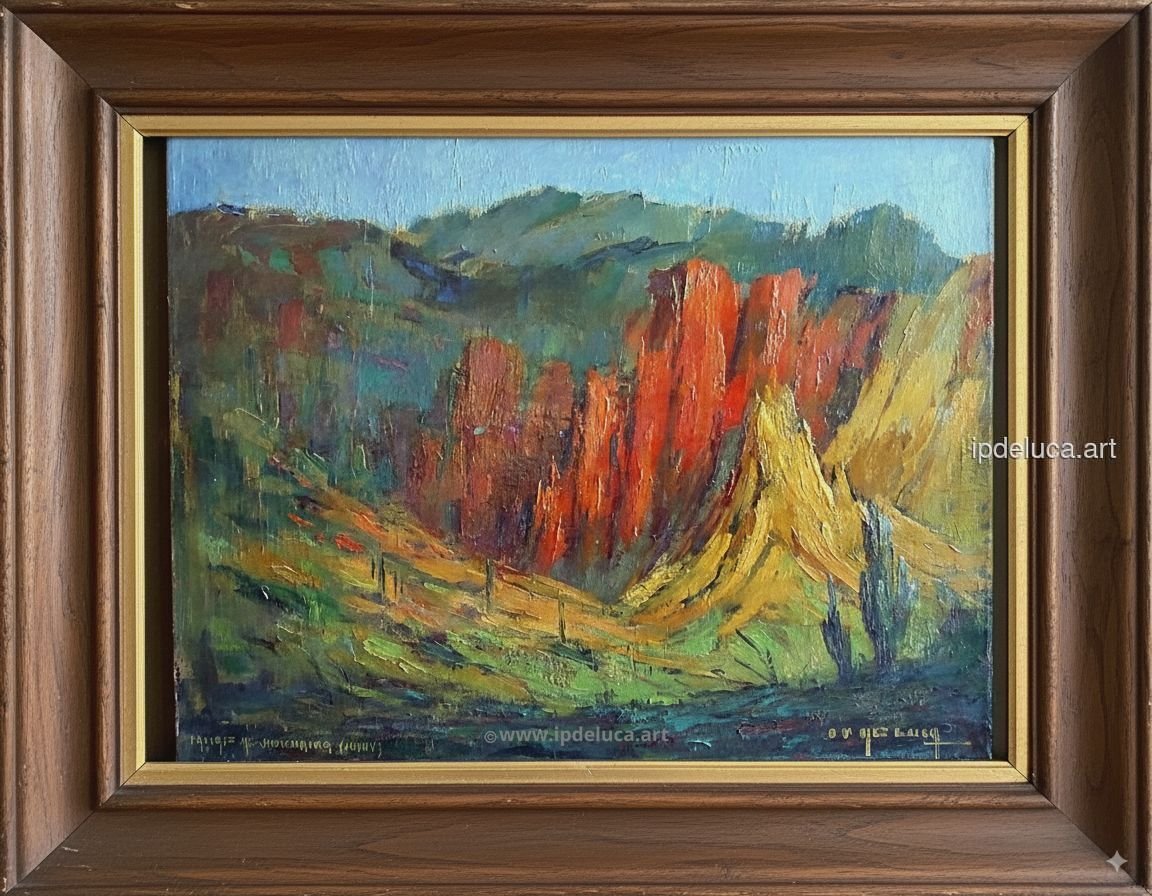
Although specific information about the style of Roberto Armando Fidel Rossi is limited, his training under Ernesto de la Cárcova at the National Academy of Fine Arts allows us to infer certain characteristics:
The long career of Rossi (1896–1957) allowed him to evolve through different periods of Argentine art:
The contributions of Roberto Armando Fidel Rossi to Argentine art as a creator include:
His teaching work represented a fundamental contribution:
Rossi also contributed to Argentine art as an active member of the artistic community:
The teaching work of Roberto Armando Fidel Rossi ensured that his influence extended beyond his own artistic production:
Rossi was part of the generation that consolidated Argentine artistic institutions:
The fact that Roberto Armando Fidel Rossi was born in Avellaneda, Buenos Aires Province, places him within the tradition of Argentine painters who, although provincial in origin, developed their careers in the capital while maintaining ties with their places of origin.
Avellaneda and Buenos Aires Province contributed several important painters to national art, showing that artistic talent was not limited to the federal capital.
The participation of Rossi in provincial salons reflects a commitment to the decentralization of Argentine art and the development of artistic circuits throughout the country.
Roberto Armando Fidel Rossi (1896–1957) represents an exemplary model of the complete Argentine painter: creator, active participant in national artistic life, representative of the country abroad, and trainer of new generations. His trajectory, from his studies under Ernesto de la Cárcova at the National Academy of Fine Arts to his consolidation as a recognized master and artist, perfectly illustrates the development of Argentine art during the first half of the 20th century.
As a colleague of I.P. De Luca, Rossi was part of a golden generation that laid the foundations of modern Argentine art, combining technical excellence with social and educational commitment. His teaching work ensured that his influence went beyond his own artistic production, contributing to the training of new generations of Argentine painters.
The sustained participation of Rossi in the National Salon, provincial salons, and international exhibitions, as well as his awards and distinctions, confirm his position among the most important Argentine painters of his time. His teaching practice also demonstrates his commitment to the comprehensive development of Argentine art, not only as individual creation but as a national cultural system.
The legacy of Roberto Armando Fidel Rossi endures both in his artistic work and in his contribution to the education and institutionalization of Argentine art, consolidating his position as a fundamental figure in the history of national painting.
This article is part of the series dedicated to the colleagues and contemporaries of I.P. De Luca, outstanding Argentine painters who contributed to the development of national art in the 20th century.


 Optimized by Seraphinite Accelerator