
No products in the cart.

Inside the Studio: The Technique and Process Behind Original Paintings
Behind every great painting is a story — of technique developed over years of practice, of materials chosen with care,…


José Roig represents a fascinating case of artistic migration and cultural integration within Argentine art of the 20th century. Born in Valencia, Spain and trained under the legendary Joaquín Sorolla, Roig became an integral part of the Argentine painting tradition after immigrating in 1929. As a colleague of I.P. De Luca, he brought European impressionist techniques to Argentina while adapting his vision to capture the unique landscape and light of his adopted country.
Spanish painter José Roig (born February 17, 1898 in Valencia, died September 29, 1968 in Firmat, Santa Fe Province) exemplifies the successful integration of European artistic training with Argentine cultural identity. His journey from the studios of Valencia to the plains of Argentina illustrates the international character of Argentine art during its formative period.
José Roig began his artistic education at the prestigious Academy of San Carlos in his native Valencia, Spain. This institution, with its long history of artistic excellence, provided him with a solid foundation in classical painting techniques and European artistic traditions.
At the Academy of San Carlos, Roig studied under two distinguished professors:
José Renau was a prominent Spanish artist and educator who provided Roig with fundamental training in drawing, composition, and traditional painting techniques. This academic foundation would prove invaluable throughout his career.
José Garnelo was another influential teacher who contributed to Roig’s artistic development, particularly in the areas of figure painting and classical techniques that characterized Spanish academic art of the early 20th century.
The Academy of San Carlos represented the continuation of Spanish academic painting traditions that dated back centuries. José Roig’s education there provided him with:
After his academic studies, José Roig had the extraordinary opportunity to frequent the studio of Joaquín Sorolla, one of Spain’s most celebrated painters and a master of impressionist technique. This experience was transformative for Roig’s artistic development.
Joaquín Sorolla (1863-1923) was renowned for:
The influence of Sorolla on José Roig would remain evident throughout his career, even after his immigration to Argentina. Sorolla’s impressionist teachings provided Roig with:
This Sorolla influence would prove particularly valuable when Roig encountered the unique light and landscapes of Argentina, allowing him to adapt European impressionist techniques to South American subjects.
José Roig immigrated to Argentina in 1929, during a period of significant cultural and economic growth in the country. Argentina in 1929 was attracting many European artists and intellectuals, creating a vibrant international artistic community.
The timing of Roig’s arrival was significant:
José Roig demonstrated his commitment to his adopted country by becoming an Argentine citizen in 1940. This decision reflected:
The process of adapting from Spanish to Argentine artistic subject matter required Roig to:
José Roig participated in various official salons, establishing himself within the formal structure of Argentine art institutions. This participation was crucial for:
Beginning in 1938, José Roig held numerous individual exhibitions, marking his establishment as a significant figure in Argentine painting. These solo exhibitions represented:
The timing of these exhibitions, beginning nearly a decade after his arrival, suggests a period of artistic adaptation and development as he learned to apply his European training to Argentine themes.
In 1961, José Roig traveled to Spain where he exhibited his Argentine landscapes. This exhibition was significant for several reasons:
The exhibition created a cultural bridge between Spain and Argentina, showing Spanish audiences how a Valencia-trained artist interpreted the South American landscape.
Exhibiting in Spain provided international validation of his success in adapting European techniques to Argentine subjects.
The exhibition demonstrated how Roig’s style had evolved from his original Sorolla-influenced Spanish training to incorporate Argentine themes and light.
This return exhibition in Spain contributed to:
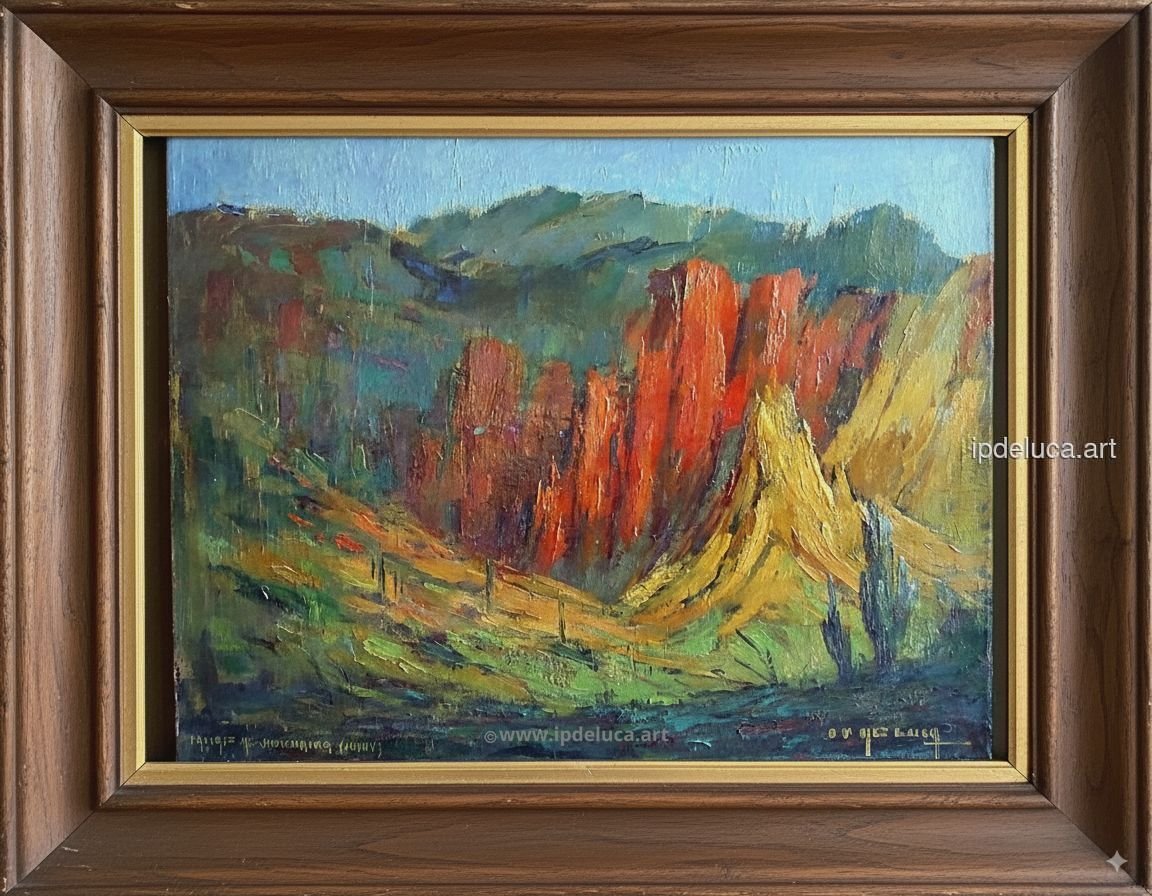
José Roig’s painting was characterized as “luminous, serene, faithful to the themes that served as his inspiration.” These characteristics reflect:
The luminous quality of his work directly reflected his training under Sorolla, who was famous for his masterful handling of light and atmospheric effects.
The serene quality suggests a contemplative approach to landscape painting that captured the peaceful aspects of Argentine rural and urban scenes.
His faithfulness to his themes indicates a respectful, observational approach that honored both his European training and his adopted Argentine subjects.
The notable impressionist influences from his master Sorolla remained evident throughout Roig’s career, manifesting in:
Roig’s success lay in his ability to apply Sorolla’s impressionist techniques to distinctively Argentine subjects:
José Roig is represented in museums in Bahía Blanca, Rosario, and the Fine Arts Museum of La Boca, confirming his integration into the canon of Argentine art. This museum representation ensures:
The presence of his work in museums in different Argentine cities demonstrates:
Representation in this important port city of Buenos Aires Province shows his connection to Argentine coastal themes.
Presence in this major city of Santa Fe Province indicates his appeal to interior Argentine audiences.
Inclusion in this Buenos Aires neighborhood museum connects him to the portside artistic tradition of the capital.
His presence in these three distinct locations reflects:
José Roig’s immigration was part of a larger historical pattern of Spanish immigration to Argentina. The early 20th century saw significant Spanish immigration, contributing to:
Through José Roig, the influence of Joaquín Sorolla reached Argentine painting, contributing:
Roig’s career provided a model for how European artists could successfully integrate into Argentine art:
As a colleague of I.P. De Luca, José Roig contributed to the international character of this artistic generation. The group included:
Roig’s European impressionist background complemented the diverse approaches of his colleagues:
The presence of artists like José Roig in the I.P. De Luca circle helped establish:
Roig’s Sorolla training in light treatment adapted remarkably well to Argentine conditions:
The luminous techniques developed for Mediterranean Spanish light found new expression in the different but equally dramatic light of the Rio de la Plata region.
Argentine seasonal changes provided new challenges and opportunities for an artist trained in Spanish light conditions.
The evolution of Roig’s palette from Spanish to Argentine subjects involved:
Sorolla’s compositional principles required adaptation to Argentine landscape formats:
José Roig’s death in Firmat, Santa Fe Province in 1968 indicates his deep integration into Argentine provincial life. Firmat is a small city in Santa Fe Province, suggesting:
His residence in Santa Fe Province contributed to:
José Roig’s career continues to provide a model for:
His work serves as important historical documentation of:
Roig’s example continues to inspire:
José Roig (1898-1968) exemplifies the successful integration of European artistic training with Argentine cultural identity. His journey from Valencia’s Academy of San Carlos and Sorolla’s studio to the museums of Bahía Blanca, Rosario, and La Boca illustrates the international character that enriched Argentine art during the 20th century.
As a colleague of I.P. De Luca, Roig contributed valuable European impressionist techniques to the diverse artistic approaches that characterized their generation. His luminous, serene paintings adapted Sorolla’s light-focused approach to distinctively Argentine subjects, creating a unique synthesis of European technique and South American inspiration.
The 1961 exhibition of his Argentine landscapes in Spain represented the full circle of his artistic journey, demonstrating how successfully he had integrated his Spanish training with his adopted Argentine identity. His presence in multiple Argentine museums ensures that his contribution to the cultural bridge between Spain and Argentina will continue to be accessible to future generations.
José Roig’s career stands as a testament to the power of artistic adaptation and cultural integration. His ability to maintain the luminous impressionist qualities learned from Sorolla while faithfully interpreting Argentine themes created a body of work that enriched both his personal artistic legacy and the broader development of Argentine painting.
From his immigration in 1929 to his death in Firmat in 1968, José Roig demonstrated that artistic excellence knows no national boundaries and that the highest achievements in art often result from the successful synthesis of diverse cultural influences. His legacy continues to inspire both immigrant artists seeking integration and Argentine artists learning from international traditions.
This article is part of the series dedicated to the colleagues and contemporaries of I.P. De Luca, distinguished painters who contributed to the development of Argentine art in the 20th century.

 Optimized by Seraphinite Accelerator