Medardo Pantoja: Master Artist and Educator from Argentina’s Northwest (1907-1976)
Introduction: Bridging Regional and National Argentine Art
Medardo Pantoja represents a crucial link between Argentina’s remote northwestern provinces and the national art scene of Buenos Aires. Born in Tilcara, Jujuy Province in 1907, Pantoja exemplifies the regional Argentine artist who achieved national recognition while maintaining deep connections to his provincial roots and contributing significantly to art education in Argentina’s interior.
As a painter, draftsman, and engraver, and later as a colleague of I.P. De Luca, Pantoja brought the unique perspective of northwestern Argentina to the broader Argentine art community. His career trajectory—from student of Spilimbergo to professor and director of provincial art education—illustrates the development of artistic infrastructure throughout Argentina during the mid-20th century.
Medardo Pantoja’s significance extends beyond his artistic production to encompass his role as an educator and cultural administrator, making him a key figure in the democratization and regionalization of Argentine art education.
Geographic and Cultural Origins: Tilcara, Jujuy
Tilcara: Gateway to Northwestern Argentine Culture
Tilcara, the birthplace of Medardo Pantoja, holds special significance in Argentine cultural geography. Located in the Quebrada de Humahuaca in Jujuy Province, Tilcara represents:
Pre-Columbian Cultural Heritage
Indigenous cultural traditions dating back centuries
Archaeological significance with pre-Hispanic settlements
Traditional crafts and artistic expressions
Cultural continuity between past and present
Unique Landscape and Light
The northwestern Argentine landscape around Tilcara offers:
Dramatic mountain scenery of the Andes foothills
Distinctive light conditions different from Buenos Aires
Rich color palette of desert and mountain environments
Cultural landscape combining natural and human elements
Regional Artistic Identity
Tilcara and the northwestern region contributed to Pantoja’s artistic development through:
Traditional color schemes reflecting regional architecture
Indigenous artistic motifs and cultural themes
Landscape sensibilities adapted to mountainous terrain
Cultural authenticity rooted in regional experience
The Significance of Regional Birth in Argentine Art
Pantoja’s birth in Tilcara was significant for Argentine art because it represented:
Geographic diversity in artistic development
Regional perspectives enriching national art
Cultural decentralization of artistic production
Provincial talent achieving national recognition
Academic Formation: Student of Spilimbergo
Spilimbergo’s Influence and Teaching
Medardo Pantoja was a student of Spilimbergo at the School of Graphic Arts of the University of Tucumán. This connection was enormously significant for his artistic development.
Lino Enea Spilimbergo (1896-1964) was one of Argentina’s most important artists, known for:
Integration of European techniques with Argentine themes
Spilimbergo’s Teaching Methods
Under Spilimbergo’s guidance, Pantoja learned:
Advanced graphic arts techniques including engraving and printmaking
Compositional principles for both painting and graphic work
Professional approaches to artistic development
Integration of social themes with artistic excellence
The Tucumán School Context
The University of Tucumán’s School of Graphic Arts represented:
Regional artistic education outside Buenos Aires
Professional training available in Argentina’s interior
Cultural development of northwestern Argentina
Academic excellence comparable to national institutions
Multi-Disciplinary Training
Pantoja’s education as painter, draftsman, and engraver reflects the comprehensive approach of Spilimbergo’s teaching:
Painting Skills
Oil painting techniques and color theory
Compositional development and artistic vision
Regional subject matter interpretation
Professional painting standards
Draftsmanship Excellence
Drawing fundamentals as the basis of all visual art
Observational skills and accurate representation
Preparatory drawing for paintings and prints
Independent drawing as finished art
Engraving Mastery
Printmaking techniques including woodcuts (xilografías)
Graphic design principles and image reproduction
Technical precision required for engraving
Artistic possibilities of graphic media
Teaching Career: From Student to Professor
Return to Academic Institution
Medardo Pantoja later became a professor at the same School of Graphic Arts where he had studied under Spilimbergo. This career progression demonstrates:
Academic Excellence Recognition
His appointment as professor indicated:
Mastery of taught subjects and techniques
Professional recognition by academic colleagues
Teaching aptitude and communication skills
Commitment to educational development
Institutional Continuity
Returning as faculty to his alma mater provided:
Educational continuity and institutional knowledge
Mentorship opportunities for new students
Artistic tradition preservation and development
Regional cultural strengthening
Educational Philosophy and Methods
As a professor trained by Spilimbergo, Pantoja likely emphasized:
Technical excellence as the foundation of artistic expression
Regional themes and cultural authenticity
Professional standards and career development
Multi-disciplinary approaches to visual arts
Administrative Leadership: Director of Provincial Art Education
Provincial School of Fine Arts Direction
Medardo Pantoja served as Director of the Provincial School of Fine Arts of Jujuy until his retirement, representing the pinnacle of his educational career. This administrative role involved:
Educational Administration
As director, Pantoja was responsible for:
Curriculum development and educational standards
Faculty recruitment and professional development
Student admission and academic progression
Cultural programming and community engagement
Regional Cultural Development
His directorship contributed to:
Art education accessibility in northwestern Argentina
Cultural infrastructure development in Jujuy Province
Regional artist training and professional development
Cultural identity preservation and evolution
Professional Legacy
Through his directorship until retirement, Pantoja established:
Lasting educational institutions in his home province
Generations of trained artists from northwestern Argentina
Cultural continuity between regional and national art
Professional standards for provincial art education
Impact on Regional Art Education
Pantoja’s leadership in Jujuy art education had profound effects:
Democratization of Art Education
Access to quality training outside major urban centers
Opportunities for regional talent development
Cultural empowerment of provincial communities
Economic development through cultural activities
Cultural Preservation and Innovation
Traditional techniques preservation and teaching
Contemporary approaches integration
Regional themes exploration and development
Cultural identity strengthening through education
Artistic Production and Exhibitions
1965 Buenos Aires Exhibition
In 1965, Medardo Pantoja held a comprehensive exhibition at the Galería Plástica in Buenos Aires, showcasing his oils, watercolors, and woodcuts. This Buenos Aires exhibition was significant for several reasons:
Media Diversity Demonstration
The exhibition included:
Oil paintings showing his mastery of traditional painting
Watercolors (aguadas) demonstrating his skill with aqueous media
Woodcuts (xilografías) highlighting his graphic arts expertise
Capital City Recognition
Exhibiting in Buenos Aires represented:
National recognition of his regional artistic development
Professional validation from the Argentine art center
Market access to collectors and critics
Career culmination after decades of development
Technical Mastery Display
The variety of media demonstrated:
Versatility across different artistic techniques
Professional competence in multiple disciplines
Teaching credibility through demonstrated expertise
Artistic evolution from student to master
Artistic Style and Regional Influence
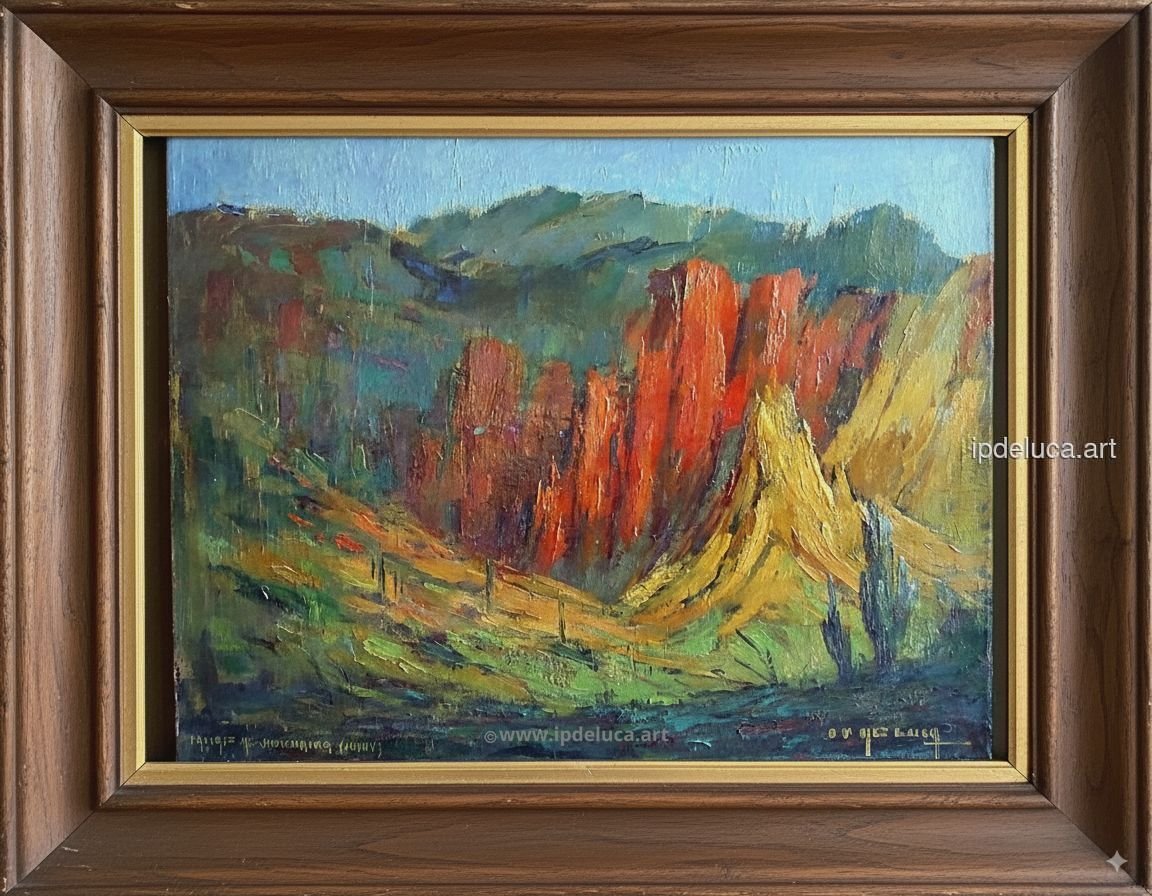
Based on his northwestern origins and Spilimbergo training, Pantoja’s work likely featured:
Regional Thematic Elements
Northwestern landscapes and architectural subjects
Cultural themes from Jujuy and surrounding areas
Indigenous influences and traditional motifs
Regional color palettes reflecting local environments
Technical Characteristics
Solid drawing foundation from academic training
Graphic arts precision from engraving expertise
Compositional strength from Spilimbergo influence
Professional finish from teaching experience
Pantoja and the I.P. De Luca Circle
Regional Diversity in the Group
As a colleague of I.P. De Luca, Medardo Pantoja brought important regional perspective to the group:
Geographic Representation
Northwestern Argentina representation in national art
Provincial perspective on Argentine cultural themes
Regional artistic techniques and approaches
Cultural diversity within the artistic circle
Educational Contribution
His teaching and administrative experience added:
Pedagogical expertise to the group’s knowledge
Educational institution connections and resources
Student development perspectives and approaches
Cultural administration experience and insights
Professional Complement to Buenos Aires Artists
Pantoja’s role in the I.P. De Luca circle provided:
Alternative career model combining art, education, and administration
Regional cultural knowledge enriching group discussions
Educational credibility supporting the group’s professional standing
Geographic network extending group influence beyond Buenos Aires
The Northwestern Argentine Art Movement
Historical Context of Regional Development
Medardo Pantoja’s career occurred during a crucial period for northwestern Argentine art:
Cultural Infrastructure Development
The mid-20th century saw:
University expansion into provincial areas
Art education establishment outside Buenos Aires
Cultural institutions development in interior provinces
Professional opportunities for regional artists
Regional Identity Affirmation
Northwestern Argentina was asserting:
Cultural distinctiveness from Buenos Aires-centered art
Indigenous heritage integration with contemporary art
Regional pride and cultural autonomy
Professional competence comparable to national centers
Pantoja’s Role in Regional Movement
Medardo Pantoja contributed to this movement through:
Professional excellence demonstrating regional capability
Educational leadership developing local talent
Cultural administration building lasting institutions
National recognition validating regional artistic development
Technical Analysis: Multi-Media Mastery
Oil Painting Expertise
Pantoja’s oils likely demonstrated:
Color mastery adapted to northwestern light conditions
Compositional skills learned from Spilimbergo
Regional subject matter interpretation and development
Professional technique suitable for exhibition and sale
Watercolor (Aguada) Specialization
His watercolor work probably featured:
Atmospheric effects suitable to mountainous landscapes
Rapid execution techniques for plein air work
Color transparency exploiting watercolor’s unique properties
Compositional economy appropriate to the medium
Woodcut (Xilografía) Mastery
Pantoja’s engraving work represented:
Technical precision required for printmaking
Graphic design skills learned from Spilimbergo
Reproducible art suitable for wider distribution
Strong compositional sense essential for graphic arts
Educational Legacy and Influence
Institutional Development
Through his teaching and administrative career, Pantoja contributed to:
Art education infrastructure in northwestern Argentina
Professional training opportunities for regional artists
Cultural institution stability and development
Educational continuity across generations
Student Development and Influence
His teaching career likely produced:
Trained artists carrying forward his methods and approaches
Cultural leaders in northwestern Argentina
Educational continuity through student-teachers
Regional artistic identity development and preservation
Cultural Administration Model
His administrative leadership provided:
Management models for provincial art institutions
Cultural development strategies for regional areas
Professional standards for provincial art education
Sustainable approaches to cultural institution development
Contemporary Relevance and Legacy
Regional Art Development Model
Pantoja’s career remains relevant for:
Regional cultural development strategies
Art education in less urban areas
Cultural administration approaches and methods
Professional development for regional artists
Educational Integration
His multi-role career provides models for:
Artist-educator professional development
Cultural administration and artistic practice integration
Regional leadership in cultural development
Educational innovation in art instruction
Cultural Preservation and Innovation
His approach to cultural development offers insights for:
Traditional culture preservation through education
Contemporary art development in regional contexts
Cultural identity maintenance and evolution
Professional opportunities creation in cultural fields
International Context: Regional Artists in National Movements
Global Patterns in Art Development
Pantoja’s career reflects international patterns of:
Regional artists achieving national recognition
Cultural decentralization and democratic development
Professional opportunities creation in cultural fields
Latin American Regional Art Development
His professional trajectory parallels developments throughout Latin America:
Regional identity assertion within national cultures
Educational expansion into previously underserved areas
Cultural administration professionalization
Traditional-contemporary synthesis in artistic development
Conclusion: Artist, Educator, and Cultural Leader
Medardo Pantoja (1907-1976) represents a complete model of the regional artist who achieved national recognition while maintaining deep commitments to his provincial origins and cultural development. His journey from Tilcara, Jujuy to student of Spilimbergo to professor and director illustrates the expansion and democratization of Argentine art education during the mid-20th century.
As a painter, draftsman, and engraver, Pantoja mastered multiple artistic disciplines while maintaining the high standards established by his mentor Spilimbergo. His 1965 exhibition at the Galería Plástica in Buenos Aires, featuring oils, watercolors, and woodcuts, demonstrated both his technical versatility and his successful integration into the national Argentine art scene.
His career progression from student to professor to director of the Provincial School of Fine Arts of Jujuy exemplifies the kind of cultural leadership that built artistic infrastructure throughout Argentina’s interior provinces. Through his administrative work and teaching career, he ensured that future generations of northwestern Argentine artists would have access to professional training and development opportunities.
As a colleague of I.P. De Luca, Pantoja brought the regional perspective and educational expertise that enriched the diverse approaches represented in their artistic circle. His commitment to cultural education and regional development complemented the various specializations and career paths of his contemporaries.
The legacy of Medardo Pantoja extends beyond his artistic production to encompass his role as a cultural institution builder and educator. His retirement after a full career in art education administration represents a life dedicated to ensuring that artistic excellence and cultural development were not limited to major urban centers but extended throughout Argentina’s diverse geographic and cultural regions.
Pantoja’s career demonstrates that regional origins and provincial loyalties can enhance rather than limit artistic achievement, and that the combination of artistic practice, education, and cultural administration can create lasting contributions to national cultural development.
This article is part of the series dedicated to the colleagues and contemporaries of I.P. De Luca, distinguished painters who contributed to the development of Argentine art in the 20th century.
Medardo Pantoja northwest Argentina artist
Tilcara Jujuy painter biography
Spilimbergo student Argentina
Argentine graphic arts education
Northwestern Argentine artists
Jujuy Provincial Fine Arts School
University of Tucumán graphic arts
Regional Argentine art educators
I.P. De Luca colleagues
Argentine woodcut artists
Medardo Pantoja northwest Argentina artist Tilcara Jujuy Spilimbergo student graphic arts educator.
We use cookies to ensure that we give you the best experience on our website. If you continue to use this site we will assume that you are happy with it.



 Optimized by Seraphinite Accelerator