
No products in the cart.

Inside the Studio: The Technique and Process Behind Original Paintings
Behind every great painting is a story — of technique developed over years of practice, of materials chosen with care,…


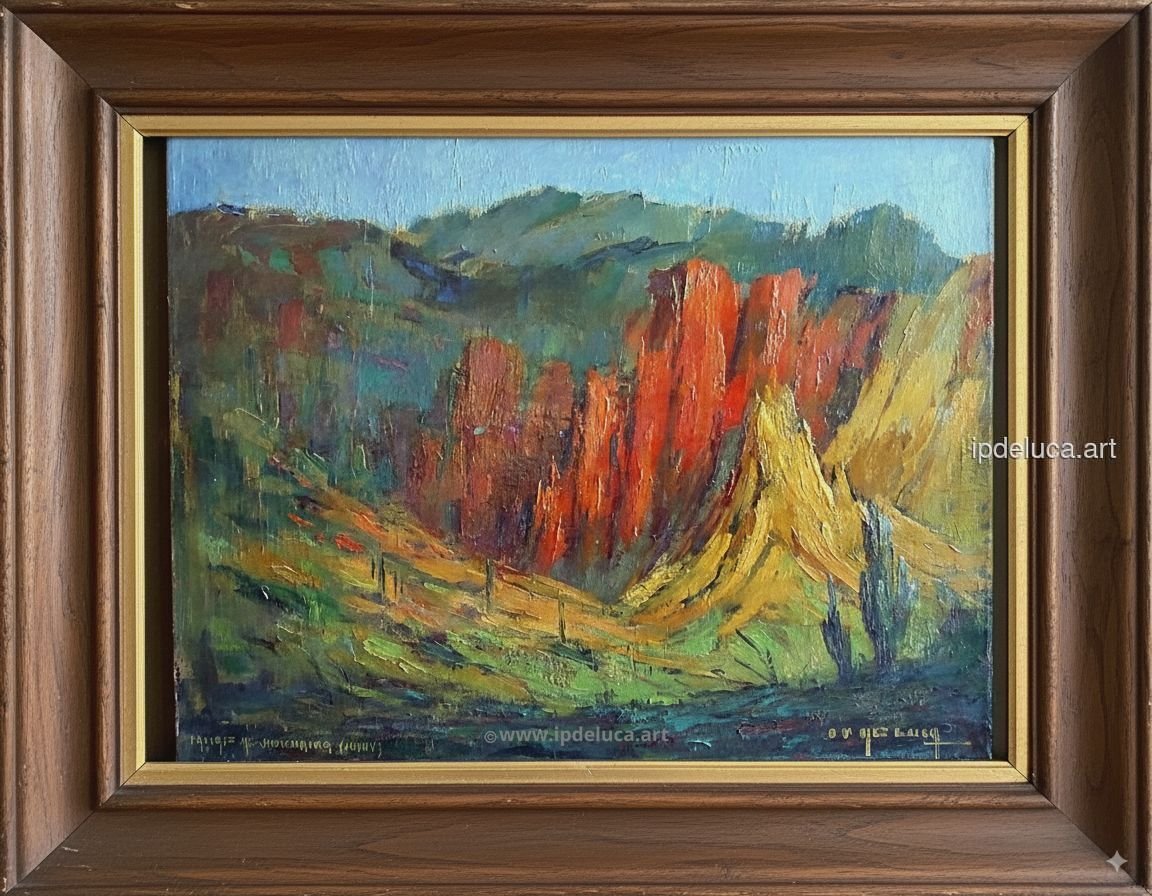
Miguel Carlos Victorica was one of the most prominent Argentine painters of the 20th century and an esteemed colleague of Italo Pedro De Luca. Born in Buenos Aires on January 4, 1884, and passing away in the same city on February 9, 1955, Victorica left an indelible mark on Argentine art and established himself as a fundamental figure in the history of Argentine painting.
Victorica’s artistic journey began under the tutelage of Italian painter Ottorino Pugnaloni, who quickly recognized his exceptional talent. In 1901, at just 17 years old, Victorica enrolled at the Sociedad Estímulo de Bellas Artes, an institution that trained many of Argentina’s most important painters of the era.
In 1911, following in the footsteps of many Argentine painters who studied in Paris, Victorica embarked on his journey to the French capital. This period was crucial in his artistic development, as Paris was then the world’s artistic epicenter.
During his European period, Victorica did not limit himself to Paris. He traveled extensively through Spain, Italy, and Belgium, absorbing influences from various pictorial traditions. These experiences enriched his palette and technical understanding, elements later reflected in his mature work.
By 1918, Victorica returned to Buenos Aires and settled in La Boca, specifically in the Vuelta de Rocha. This decision marked the beginning of his most productive and defining artistic period.
This corner of La Boca provided him with a constant visual laboratory, where he studied the effects of light on the Riachuelo, the changing skies, and the daily lives of dock workers.
Victorica’s artistic excellence was widely recognized in Argentina and abroad. Among his greatest achievements was winning the First Prize at the National Salon in 1932, securing his place among Argentina’s leading painters.
This work, created during his Parisian period, was described as “a major milestone” of his career and received special mention at the French International Exhibition.
He was part of a golden generation of Argentine painters that included Italo Pedro De Luca and others, defined by strong academic training, European experiences, commitment to Argentine themes, and the search for a national style.
Victorica contributed to the establishment of a national Argentine school of painting, inspiring future generations and helping define the path of modern Argentine art.
Miguel Carlos Victorica (1884–1955) represents one of the pinnacles of Argentine art. His career illustrates the evolution of Argentine painting toward modernity, blending academic tradition with contemporary innovation. His work continues to be studied and admired as an enduring example of artistic excellence.
THIS ARTICLE IS PART OF A SERIES DEDICATED TO THE COLLEAGUES AND CONTEMPORARIES OF I.P. DE LUCA, NOTABLE ARGENTINE PAINTERS WHO CONTRIBUTED TO THE DEVELOPMENT OF NATIONAL ART IN THE 20TH CENTURY.

 Optimized by Seraphinite Accelerator