
No products in the cart.

Inside the Studio: The Technique and Process Behind Original Paintings
Behind every great painting is a story — of technique developed over years of practice, of materials chosen with care,…


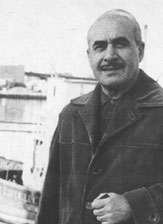
Oscar Antonio Vaz represents a fascinating facet of 20th-century Argentine art: that of the self-taught painter who, through dedication and natural talent, managed to position himself among the most recognized Argentine painters of his generation. As a colleague of I.P. De Luca, Vaz was part of a circle of artists that defined the Argentine pictorial scene in the mid-20th century.
Born in Buenos Aires on October 10, 1909, Oscar Antonio Vaz specialized in marine painting, becoming one of the most prominent exponents of this genre in Argentina. His career, marked by self-teaching and perseverance, offers a unique perspective on the development of Argentine art outside traditional academic circuits.
Unlike many Argentine painters of his era who trained at institutions such as the Sociedad Estímulo de Bellas Artes, Oscar Antonio Vaz followed a different path as a self-taught painter. This characteristic sets him apart in the Argentine art landscape and demonstrates that talent and dedication can surpass the barriers of formal education.
Although primarily self-taught, Vaz did not entirely disregard formal instruction. He received drawing lessons from Numa Ayrinhac, an encounter that was fundamental for his initial technical development. These drawing lessons provided Vaz with the technical foundation necessary to later develop his personal style.
Numa Ayrinhac was recognized in the Buenos Aires artistic scene, and his influence on Oscar Antonio Vaz represents a bridge between academic tradition and the self-taught development that would characterize the painter’s entire career.
A crucial moment in Oscar Antonio Vaz’s formation was his time at the workshop of marine painter Justo Lynch. This experience was decisive in Vaz’s specialization in marine painting, a genre that would become his hallmark within Argentine art.
Justo Lynch was one of Argentina’s most recognized marine painters, and his workshop represented the most important learning center for those wishing to specialize in this pictorial genre. Lynch’s influence on Oscar Antonio Vaz is evident not only in his thematic choices but also in his technical approach to water, vessels, and seascapes.
Marine painting requires specific technical and thematic knowledge. Oscar Antonio Vaz developed a deep understanding of:
As an Argentine marine painter, Vaz specialized in capturing:
A milestone in Oscar Antonio Vaz’s career was his first solo exhibition in 1946 at the Müller Gallery in Buenos Aires. This exhibition marked his official entry into the professional art circuit and confirmed his position among relevant Argentine painters.
The Müller Gallery was one of the most prestigious in Buenos Aires in the 1940s, and the fact that a self-taught painter like Vaz managed to exhibit there speaks both to his artistic quality and the evolution of Argentine art toward greater openness and diversity.
From 1943, Oscar Antonio Vaz actively participated in salons and group exhibitions, maintaining a consistent presence in the Argentine art scene. This sustained participation over decades demonstrates:
Between 1959 and 1960, Oscar Antonio Vaz undertook a trip to Europe, an experience that significantly enriched his artistic perspective. This journey, undertaken as an established Argentine painter, allowed him to:
During his European stay, Vaz exhibited his works in Spain and France, bringing Argentine art, specifically Argentine marine painting, to international audiences. These European exhibitions represented:
The quality and relevance of Oscar Antonio Vaz’s work is reflected in its presence in important Argentine institutional collections:
Vaz is represented in:
This presence in marine- and port-related institutions underscores the authenticity and quality of his depiction of the Argentine nautical world.
Oscar Antonio Vaz’s works are also part of:
This museum presence confirms his position within the canon of Argentine art and ensures the preservation of his legacy for future generations.
Marine painting has a long tradition in Argentina, a country with an extensive Atlantic coast and an internationally significant port. Oscar Antonio Vaz fits into this tradition, which includes figures such as:
The Argentine marine painting developed by painters like Vaz has specific characteristics:
As a colleague of I.P. De Luca, Oscar Antonio Vaz was part of a generation of Argentine painters characterized by:
Vaz’s status as a self-taught painter adds diversity to the group of I.P. De Luca’s colleagues, showing that Argentine art at the time was mature and open enough to integrate different paths of artistic formation.
Oscar Antonio Vaz’s work is characterized by:
Throughout his career, Vaz developed a personal style that combined:
Oscar Antonio Vaz made significant contributions to Argentine art:
Vaz’s example as a successful self-taught painter inspired:
Oscar Antonio Vaz (1909-1987) represents a fundamental facet of 20th-century Argentine art: the specialized painter who, through self-teaching and dedication, achieves both national and international recognition. His status as a colleague of I.P. De Luca places him in a golden generation of Argentine painters who combined technical excellence with national identity.
Vaz’s specialization in marine painting not only enriched this genre within Argentine art but also helped create a visual iconography of the Buenos Aires port and maritime life that remains a testament to an era.
His career, from the first drawing lessons with Numa Ayrinhac to exhibitions in Europe, through his training in Justo Lynch’s workshop and his first solo show at the Müller Gallery, perfectly illustrates the artistic development possibilities offered by the mid-20th-century Argentine cultural environment.
The presence of his works in museums and institutional collections ensures that Oscar Antonio Vaz’s legacy endures as a testament to the richness and diversity of Argentine art, showing that talent and perseverance can overcome any limitations of origin or training.
This article is part of a series dedicated to the colleagues and contemporaries of I.P. De Luca, notable Argentine painters who contributed to the development of national art in the 20th century.

 Optimized by Seraphinite Accelerator